

What Mil Poly Bag Do I Need?
Mil thickness is the single most important factor when choosing a poly bag. Too thin and your product gets damaged. Too thick and you're wasting money. This guide helps you get it exactly right.
What Does "Mil" Mean?
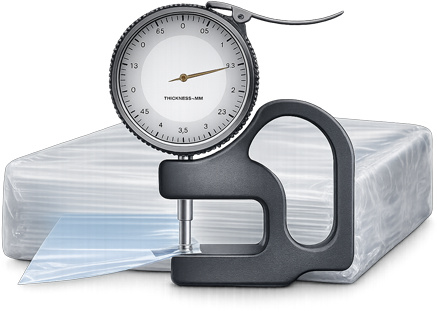
A "mil" is a unit of measurement equal to one-thousandth of an inch (0.001"). It measures the thickness of plastic film. A 2 mil bag is 0.002" thick — twice as thick as a 1 mil bag. The higher the number, the stronger and more puncture-resistant the bag.
Mil is not the same as millimeter. 1 mil = 0.0254 millimeters. Always confirm which unit a supplier is using — especially with overseas sources.
Mil measures film thickness only — not bag size. Two bags can be the same size but very different mil thicknesses. Always spec both dimensions and mil when ordering.
Mil Thickness Comparison Chart
Here's a quick visual guide to the most common poly bag thicknesses and what they're best suited for.
| Thickness | Weight Class | Puncture Resistance | Best For | Typical Use |
|---|---|---|---|---|
| 1 Mil | Light | Low | Light, clean items | Garments, documents, bread |
| 1.25 Mil | Light | Low–Med | Retail, apparel | T-shirts, soft goods |
| 1.5 Mil | Light | Medium | General packaging | Printed materials, soft items |
| 2 Mil | Standard | Medium | Most everyday use | Parts, jewelry, food, retail |
| 3 Mil | Med-Heavy | Good | Heavier items | Hardware, tools, electronics |
| 4 Mil | Heavy | Very Good | Sharp edges | Metal parts, fasteners, blades |
| 6 Mil | Extra Heavy | Excellent | Industrial, long storage | Machinery parts, outdoor |
Use Cases by Industry
Different industries have very different requirements. Here's what professionals in each field typically choose and why.
- Small jewelry pieces, beads
- Retail display packaging
- Sample & gift packaging
- Reclosable zip bags
- Bread & bakery items
- Deli & sandwich bags
- Produce, dry goods
- FDA-approved applications
- Bolts, screws, fasteners
- Sharp metal parts
- Tool storage & shipping
- Heavy components
- T-shirts, garments
- Folded soft goods
- Retail poly bags
- Dry cleaning bags
- Computer components
- Anti-static packaging
- Cables & accessories
- PCBs & circuit boards
- Machine parts & components
- Long-term warehouse storage
- Outdoor & moisture exposure
- Pallet covers & liners
Common Mil Selection Mistakes
These are the most frequent mil selection errors we see from customers — and how to avoid them.
Going too thin to save money
Choosing 1 mil bags for 3 mil applications leads to punctures and damaged products. The cost of damaged goods far exceeds the savings from buying thinner bags.
✓ Match mil to product weight and sharpness, not just price.Over-specifying for light items
Using 6 mil bags for jewelry or documents wastes money and makes bags harder to seal and open.
✓ Light, clean items rarely need more than 2 mil.Ignoring sharp edges
Metal parts, screws, and blades will puncture thin bags during shipping. This is the #1 cause of bag failure in industrial applications.
✓ Always go 4 mil or heavier for anything with a sharp edge or corner.Forgetting about long-term storage
Bags used for warehouse storage need to resist moisture and temperature changes over months. Thin bags become brittle and fail over time.
✓ For storage longer than 30 days, use 4 mil minimum.Confusing mil with millimeter
Some suppliers list thickness in millimeters. A "0.05mm" bag equals 2 mil. Always clarify the unit when comparing suppliers.
✓ 1 mil = 0.0254mm. Multiply mm × 39.37 to convert to mils.Mil Thickness Selector
Answer 4 quick questions and we'll recommend the right mil thickness for your application.
? Find Your Ideal Mil Thickness
Shop Poly Bags by Mil Thickness
Browse our full selection organized by mil thickness — all in stock with same-day shipping available.
Not sure? We're happy to help.
Our team has been helping customers choose the right poly bags since 2007. Call us or check out our measuring guide.
How to Measure Guide ? Call (844) 267-1081